How to Calm an Aggressive Dog Without Stress
It becomes tiresome and infuriating working with a cranky dog—yours and you. Dogs only become aggressive most commonly because they are fearful and apprehensive or because they are not trained. The truth is, if you have correct techniques, patient of mind, and a peaceful mind set, you can deal with aggression realistically without exacerbating the tension.
In this guide, we’ll explore the causes of dog aggression, proven calming strategies, and safe training techniques that help build trust and restore peace in your household.
Understanding Why Dogs Become Aggressive
A dog showings aggressions isn’t necessarily a bad dog oftens it’s simply reactings to specific triggers. Knowing the cause makes it easier to address the behavior.
Common Causes of Aggression
- Fear: Dogs lash out when they feel threatened.
- Territorial Instincts: Protecting home, toys, or food.
- Lack of Socializations Inadequates socializations with humans or other dogs.
- Medical Issues: Pain or sickness will result in irritability.
- Frustration or Stress: Nerves introduce reactive behavior.
???? Internal Linking Suggestion: You may refer to a post such as “How to Stop Separation Anxiety in Dogs Fast” here since anxiety and aggression go hand in hand.
Warning Signs of Aggression in Dogs
Early warning signs prevent escalation. Be aware of
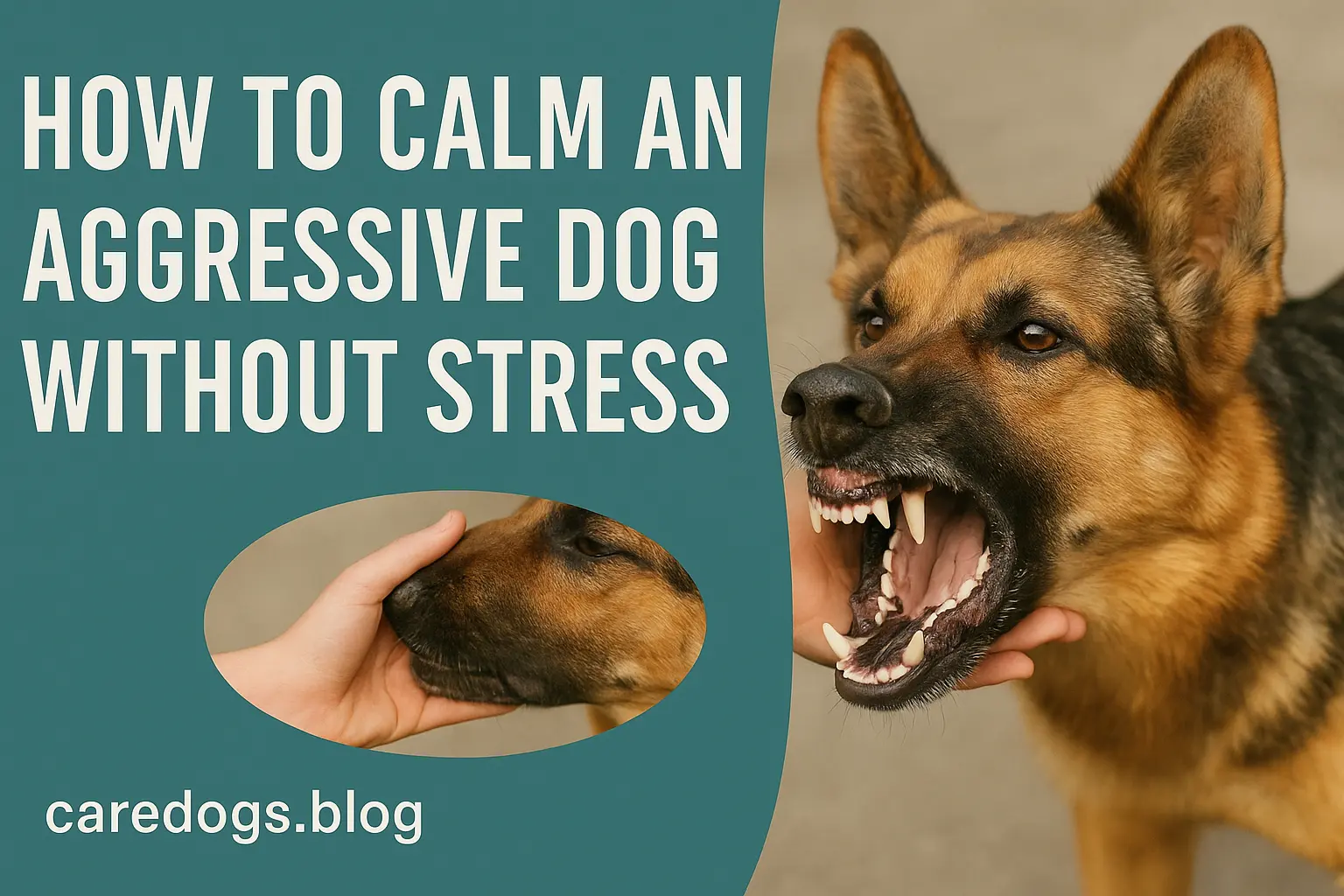
- Growling or snarling
- Standing up the back hair
- Frozen staring
- Snapping or lunge
- Stiffening body stance
???? Above all, here, is to remain calm before aggression escalates to biting.
How to Calm an Aggressive Dog Without Stress
1. Remain Calm Yourself
Dogs are highly sensitive emotionally. Scaring or yelling at them will aggravate your dog. Breathe slowly, make a slow walk, and speak an even deep voice.
2. Know and Avoid Triggers
Keeps a records of when the aggressions has occurreds. Does he attack strangers? Other animals? During meals? Identification of triggers helps you to handle situations better.
???? Tips When the dogs becomes guardings foods feeds the dogs in a separates rooms alones.
3. Practice Positive Reinforcement
Reward relaxed behavior instead of punishing aggression.
- When your dog relaxes around a trigger, reward or praise him.
- Don’t scream, hit, or employ harsh corrections—these enhance violence.
4. Provides Adequates Exercises
Wearys dogs are less forcefuls. Regular exercise, play, and mental stimulation reduce frustration and allow the release of stored-up energy.
???? Internal Linking Proposal: See a blog like “10 Easy Exercises to Get Your Dog Active and Fit.”
5. Desensitizations Trainings
Systematicallys habituates the dogs to stimulis in a well controlled settings. For example:
- If they bark or growl at visitors, start by rewarding relaxed responses when a person walks by really far away.
- Gradually decrease distance with time.
This is slow but extremely effective method.
6. Create a Safe Space
Every dog needs a peaceful refuge. Provide a crate, bed, or quiet room where your dog can escape. Calms music soft toys and warms blankets can soothes thems.
7. Use Naturals Calms Measures
Naturals treatments cure anxiety induced aggressions
- Aromatherapys Lavenders sprays or diffusers.
- Relaxations Supplements Herbals chewables with chamomiles or L theanines.
- Pressure Wraps Likes anxiety vests providings reassurances.
? Always talks it overs with your vets before supplementings.
8. Employs Obedience Trainings
Basic commands like sit stay and leave it place you in controls when things get out of hands. Trainings gives you habits that reduces anxiety and aggressions.
9. Be Consistents
Dogs like routines. Schedule training, meal times, and exercise to offer stability that reduces stress-aggression.
10. Employ Professional Help When Necessary
If aggression persists, seek out the advice of a qualified dog trainer or behaviorist. They can provides individualized methods and help determines whether the aggressions is medicals or behaviorals.
What NOTs to Do When Calmings an Aggressives Dogs
- Do Not Punishs Aggressions It typically worsens the behaviors.
- Don’t Corner Your Dog: It creates fear and defensiveness.
- Don’t Force Socialization: Forcing your dog to be socialized to places where they may be relaxed is damaging.
- Don’t Ignore Warning Signs: It is always better to tackle things early on before matters get out of control.
Setting Up A Stress-Free Environment
Other than training, environment also plays its role with your dog.
- Ensure low levels of noise in the house.
- Avoid last-minute changes in the regime.
- Provide lots of play and bonding.
- Play soothing background music like classical or white noise.
FAQs regarding Soothing an Aggressive Dog
- Are aggressive dogs completely cured?
Aggression is generally under control and chiefly dampened, but complete “cure” will depend on the cause and proper training. - Muzzle an aggressive dog?
Yes, in certain situations. Muzzling will safeguard all involved with training, but proper training must never be replaced with a muzzle. - Does spaying or neutering decrease aggression?
Yes, sometimes—most frequently when aggression has a hormonal basis. It is not, though, an absolute. - How long does it take to train an aggressive dog?
Depending. Some are changed in weeks, others month after month after month. - Are medicals issues the reasons for aggressions?
Yes. Pain, neurological illness, or thyroid illness can lead to aggression. Always eliminate medical reasons with your vet. - Is breed a causative factor in aggression?
There are some breeds that will certainly possess a more refined guarding instinct, but aggression is much more environmental, trainable, and social than it is breed-based.
Conclusion
This requires patience, understanding, and consistency in training how to desensitize an aggressive dog without stressing it. Being calm yourself and not getting upset, rewarding good behavior, and providing plenty of exercise and mental stimulation, you are able to desensitize your dog and lower the reactivity and make it feel safer.
Remember, aggression is often the result of stress or fear, not disobedience. With rewarding, establishing order, and seeking an expert when needed, your dog is less stressed, happier, and more congenial.
An undistressed dog not only easier to manage, but a happier and a more loving friend.