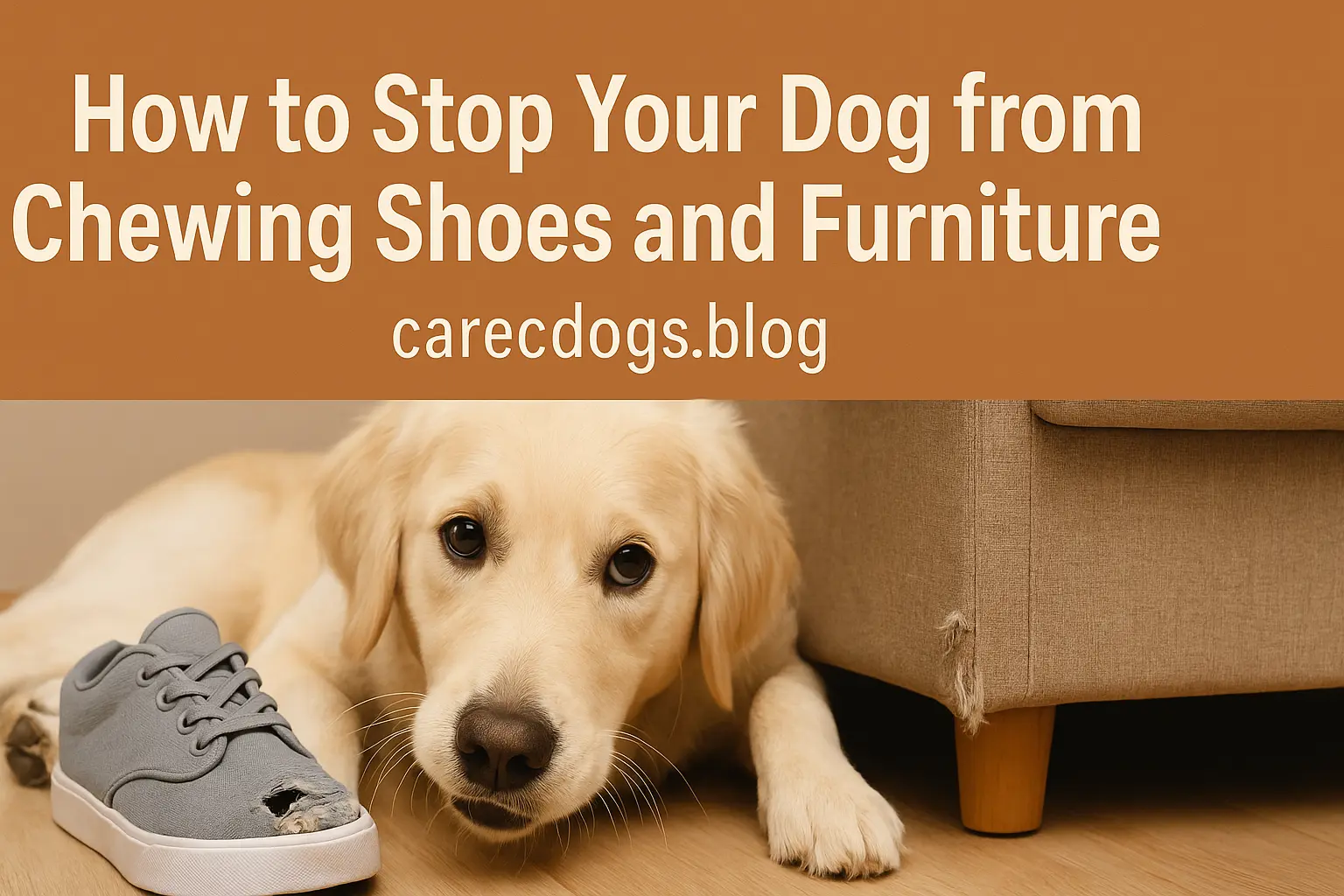
How to Stop Your Dog from Chewing Shoes and Furniture
If you’ve ever come home to find your favorite pair of sneakers torn apart or your couch legs covered in teeth marks, you’re not alone. Chewing is one of the most common (and frustrating) dog behaviors. While it’s perfectly natural—especially in puppies—it becomes a problem when your dog targets shoes, furniture, or other household items.
The not-so-great news? You can teach your dog to quit chewing damage without stress or punishment using the right methods. Stick with this guide, and we’ll explain why dogs chew, why they chew it, and how you can redirect them so your house (and belongings) remain in one piece.
Why Do Dogs Chew Shoes and Furniture?
It is useful to understand why it happens before solving the issue. Chewing is not necessarily bad habit—it’s simply your dog’s adaptation for a number of needs.
1. Teething of Puppies
As in humans babies puppies go throughs teethings too. Chewing calms sore gums and accelerates the teething process of permanent teeth eruption but typically follows loss of the baby teeth initially.
2. Boredom or Excess Energy
A lonely dog with inadequate physical and mental exercise will typically fall into chewing as entertainment. Shoes and parts of furniture are easy targets.
3. Separation Anxiety
A fews dogs chew because they’re stressed or anxious and usually when they’re beings left behinds. It’s a comfort response.
4. Insufficient Training or Rules
Dogs don’t know what they can’t have. If they don’t know that shoes aren’t playthings, they’ll chew everything in view.
5. Natural Instinct
Chewing is a natural dog instinct. It keeps their teeth clean, maintains strong jaws, and consoles them.
???? Main Takeaway: Chewing isn’t the issue—it’s training your dog on what to chew and what not to.
10 Proven Techniques to Stop Destructive Chewing
1. Provide Plenty of Chew Toys
Substitute furniture and shoes with safe alternatives. Rubbers toys rope toys and dentals chews fulfills your dog’s chewings urge without jeopardizings your belongings.
Pro Tips Changes toys to create newness. A new toy is more interestings than yesterday’s identical toy.
2. Use Deterrent Sprays
Spray furniture legs, shoes, or other objects of high value being chewed with dog-safe bitter sprays. The unpleasant taste discourages chewing.
DIY Solutions Mix water and apple ciders vinegars as a homemades repellents.
3. Supervise and Redirect
Caught your dog in the act of chewing? Stay calm. Don’t yell merely removes the shoes or objects and replace it with one of theirs. Rewards them when they chew the propers objects.
Why It Works: Dogs learn faster when good behavior is reinforced with rewards rather than punishment.
4. Boost Exercise and Playtimes
Fatigued dogs well mannered dogs. Frequent walkies, fetches, and interactive play tire them out and fight boredom-chewing.
???? Internals Linkings Suggestions Link to 10 Easy Exercises to Keep Your Dogs Fit and Actives.
5. Works on Separations Anxiety
If chewings happens mostly when you’re aways your dogs may have anxiety. Start by leavings for short periods and gradually increasings time aparts. Puzzle toys or treatcdispensing toys can keeps them occupieds.
???? Internal Linking Suggestion: Link to “How to Stop Separation Anxiety in Dogs Fast.”
6. Puppy-Proof Your House
If you own a puppy, get your space under control with them. Store shoes in closets, block rooms with baby gates, and set furniture legs in coverings if necessary. Prevention is the key when they are learning boundaries.
7. Teach “Leave It” and “Drop It” Commands
These commands provide you with command when your dog encounters something that they shouldn’t. Starts usings low value items and reward obedience every times.
???? Internal Linking Suggestion: Link here to “How to Teach Your Dog Basic Commands in a Week.”
8. Give Mental Stimulation
As brains, dogs also need brain exercises. Use food puzzle toys, scent games, or obedience training to challenge their mind and prevent boredom chewing.
9. Hide Shoes and Temptations
At times the simplest solutions is indeed the best ones. Keep shoes in closets and away from that which is valuable on the floor. If your dog is unable to get them, then they won’t be chewed on.
10. Be Patient and Persistent
Training takes time. Your dog will make mistakes, but the trick is to be consistent. Gradually, they will learn what’s and isn’t chewable.
What Not to Do When Stopping Chewing
- Scream or yell. It creates fear, not a lesson.
- Steer clear of old shoes as toys. Dogs don’t possess the smarts to realize shoes are “okay” shoes and not things you put on your feet.
- Let it not come to this. Redirect and reward good behavior.
When Chewing Could Be a Sign of Something Deeper
Over-chewing is sometimes not a training issue, but an indicator of health or behavior problems:
- Teething pain (dogs chew because it hurts).
- Vitamin or mineral deficiencies (over-craving for more minerals).
- Anxiety (excessive chewing, salivating, pacing).
???? If you notice chewing accompanied by other symptoms like weight loss, vomiting, or salivating, see your vet.
FAQs on Dog Chewing Shoes and Furniture
- Is chewing universal in all dogs?
Yes. Chewing is a natural behavior, but it must be aimed at safe and appropriate objects. - How do I prevent my puppy from chewing furniture?
Offer teething toys, supervise intensely, and employ deterrent sprays. Don’t forget that puppies require double patience. - Will my dog one day outgrow chewing?
Most puppies get better with time, but any dog can use lifelong training and redirection. - Can chewing be caused by anxiety?
Yes. Separation-anxiety dogs will often chew as a stress response. Enrichment and training will assist. - Do specific breeds chew more?
High-energy breeds such as Labradors, Huskies, and Terriers will likely chew more if not adequately exercised.
Chewing on furniture. Chewing on shoes. Irritating, but also fixable with the proper mindset. Knowing the reasons why your dog is chewing and incorporating training, redirection, and enrichment, you can protect your property without sacrificing a happy dog.
Keep in mind: chewing is “bad” behavior, no—it’s normal. As a pet parent, it’s your responsibility to redirect your dog away from unhealthy expressions of their instincts. With persistence and consistency, goodbye chewed shoes and hello well-behaved friend.